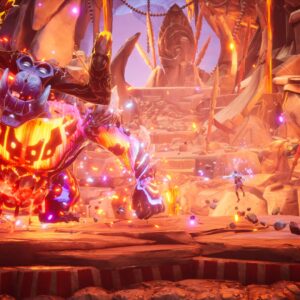
There’s a moment, nestled in the liminal space between myth and future, where storytelling doesn’t just entertain—it restores. Crocodile Dance, the Africanfuturist animated thriller now gaining global attention through its successful Kickstarter campaign, embodies exactly that moment. Directed by Nigerian creative Shofela Coker—the Emmy-nominated animator behind Disney’s Kizazi Moto short Moremi—and co-helmed by Nadia Darries, this film promises a bold reimagining of an ancient West African legend in a form that feels both timeless and radical.
At its heart is Roukia, a gifted musical storyteller whose voice has been silenced by a generational curse. To save herself and her family, she must confront the Mami Wata—the monster-goddess of water whose spell has haunted her people for centuries. This is not merely a battle with a supernatural force; it’s a journey of reclamation, music, and myth set against a visual landscape that unites tradition with Afro-bohemian futurity.
Reclaiming Narratives
Across the continent and its diaspora, centuries of colonialism disrupted the continuity of our mythic traditions. Stories that once guided communities, encoded ethics, and connected us across generations were displaced, suppressed, or filtered through foreign lenses. Crocodile Dance is part of a wave of animated works seeking to undo that erasure—not by nostalgic replication, but by re-envisioning African narratives with the storytelling power they always deserved. It’s a reclamation rooted in authenticity: mythologies told by African voices, animated through techniques that honor the depth and diversity of our cultural heritage.
The film’s aesthetics reflect this deep respect for cultural roots. Its world draws on landscapes and artistic traditions from southwestern Nigeria—places like Badagry, Idanre, and Ibadan—melding them with imaginative environments that feel at once familiar and otherworldly. The team blends richly crafted 2D and 3D animation to evoke a sensory experience that’s uniquely African and boldly futuristic.
Africanfuturist Storytelling: Beyond the Margins
The term Africanfuturism—distinct from broader Afrofuturism—is a celebration of speculative futures rooted in African cultures, philosophies, and mythic legacies. It’s a movement challenging Western hegemony in genres like science fiction and fantasy by placing African perspectives at the center. Crocodile Dance stands proudly within this tradition: a narrative that embraces folklore (the Mami Wata figure) without confining it to dusty archives, instead propelling it into the 21st-century imagination with musical vibrancy and emotional complexity.
In doing so, it joins a growing cohort of animation projects—including globally recognized works such as Nigeria’s Iwájú and other homegrown stories—that prove African animators are not just participating in global storytelling but transforming it. These creators are re-weaving myth, music, and visual innovation into narratives that resonate with audiences across continents and generations.
What makes Crocodile Dance especially significant is not just its compelling plot, but the broader cultural resonance it carries:
- It centers African voices in the creative process, from writing and direction to production and cultural consultation.
- It reclaims mythic heritage—like the legendary Mami Wata—on terms shaped by those who grew up with the stories, rather than through colonial reinterpretations.
- It reflects a new confidence in animation as a medium for serious African storytelling, challenging the misconception that compelling narratives must come from outside the continent.
As the film moves from Kickstarter campaign to fully realized feature (with a vision of a 90-minute animated epic), it symbolizes a collective yearning: to see African stories told by Africans, for the world, without dilution or stereotypes. Projects like Crocodile Dance signal a renaissance in African animation—one that honors our past while boldly imagining our futures.
In a world where stories shape reality, Crocodile Dance reminds us that our myths are not relics to be archived—they are living, dancing bridges between who we were, who we are, and who we can become.